Carpenter ants or termites: which signs point to which pest
Carpenter ants and termites can both leave homeowners staring at damaged wood and wondering what is living inside it. The two insects are often confused because they appear in similar places, especially near damp wood, basement framing, porch posts, and old window trim. The distinction matters, though. The treatment approach for ants is not the same as the approach for termites, and the wrong assumption can lead to repeated products, missed nesting sites, or structural damage that keeps spreading.
The useful question is not just "is it an ant or a termite?" It is also what the evidence says, where the evidence is located, and how serious the situation appears. Visible insects, wings, frass, mud tubes, hollow wood, and activity at different times of year each tell part of the story. Comparing those signs side by side makes the choice between ant focused control and termite focused control much clearer.
What the insects look like when they are visible
Carpenter ants are true ants. A worker usually has a narrow waist, elbowed antennae, and a body that looks clearly divided into sections. Depending on the species, workers may be black, reddish, or a mix of both. They vary in size within the same nest, which can make a single insect look larger or smaller than another nearby. Winged ants, sometimes called swarmers, have two pairs of wings of unequal length and the same narrow waist as workers.
Termites have a broader, more even body shape. Their antennae are usually straight rather than bent, and their wings, when present, are long and roughly equal in length. Worker termites are often pale, soft bodied, and shy about light, so people may see damage before they see the insects themselves. Winged termites can look darker and may be mistaken for flying ants, especially when they appear indoors around windows or lights.
A single insect found on a floor is not always enough. Ants travel widely while searching for food, so a carpenter ant indoors may have come from a nest outside. Termites found indoors, especially pale workers inside wood or behind a wall, are more concerning because the colony may already be established in the structure. This is one reason the Pest Agent ant identification guide can be useful when the insect itself is the main clue, while still comparing the findings against termite signs.
Damage patterns that separate the two
Both pests can remove wood from the inside, but they tend to leave different traces. Carpenter ants do not eat wood as food. They excavate it to make nests, often following softened areas created by moisture or decay. The galleries can be smooth and clean, with little loose material inside. A nest may be in a wall void, a sill plate, a tree stump, or a damp beam. Activity may be noticed at dusk or at night when workers move between the nest and food sources.
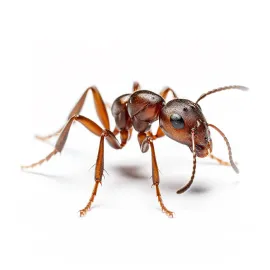
Frass is one of the strongest clues for carpenter ants. It can look like coarse sawdust, sometimes mixed with bits of insulation or insect parts. It may collect below a small opening in wood or near a wall gap. Because ants push material out as they excavate, the pile may appear near a nest entrance but can also be carried some distance away.
Termites eat cellulose, which includes wood and paper products. Their feeding can leave mud lining inside galleries, and subterranean termites often build mud tubes that connect soil to wood. These tubes may appear on foundation walls, piers, or inside crawl spaces. They are usually brown, pencil sized or wider, and may be active, repaired, or abandoned. Termite damage often has a layered look, with thin sheets of wood left between hollowed spaces. In a serious infestation, trim, drywall, or flooring may sound hollow or show staining at seams.
Drywood termites are different from subterranean termites. They can live in wood without soil contact and leave small holes plus dry, pellet like frass. Their pellets are more uniform than typical carpenter ant frass. This overlap is one reason visual ID needs context, not a single clue in isolation.
Where activity tends to show up
Carpenter ants often nest where wood has been softened by leaks, poor ventilation, or ground contact. Common areas include bathroom framing, kitchen sinks, window frames, door thresholds, decks, and tree branches touching a building. Outdoors, a stump or dead limb near the house can serve as a parent colony while a smaller satellite nest exists indoors. Seeing large ants in the evening near a damp window or along a baseboard can fit this pattern.
Subterranean termites usually begin below ground and move upward through soil contact or shelter tubes. They need moisture, so plumbing leaks, crawl space humidity, and soil piled against siding can raise risk. Swarmers may appear after warm rain, often near lights or windows. A pile of discarded wings on an interior windowsill can be a sign that swarmers emerged inside, which deserves closer inspection.
Carpenter ant swarmers also shed wings, so wings alone do not settle the question. Wing shape, body waist, and the location of the wings matter. If the evidence is unclear, a careful comparison of insect features and damage traces is more reliable than guessing from the season alone.
How ant killer recommendations fit the decision
Ant killer recommendations make sense when the evidence points to ants rather than termites, especially when the insects are visible, have narrow waists, and are trailing along paths. Some products target ants that forage indoors, while others are intended for outdoor nests or perimeter activity. The right choice depends on whether the main issue is a few foragers, a nest in moist wood, or an outdoor colony sending workers inside. Simply spraying the ants that are seen may reduce visible activity while leaving the nest untouched.
For carpenter ants, moisture and nesting conditions are part of the problem. A product label that mentions ants may not address the damp wood that made the site attractive. Drying the area, fixing leaks, trimming vegetation that contacts the building, and separating soil from wood can reduce conditions that support nesting. If damage is extensive or the nest is hidden in a structural void, professional assessment is usually the safer route. Pest Agent provides pest advice and recommended products for household pest problems, so the topic fits with comparing product types and practical response options.

Termites call for a different decision. Ant bait placed along a trail will not solve a termite colony in a foundation wall. Termite control may involve soil treatment, bait systems, wood treatment, or structural repairs, depending on the termite type and how the infestation is spread. Those methods carry label requirements and site specific limits, so they are not interchangeable with general ant products. When mud tubes, pale workers in wood, or hollow damaged framing are present, the comparison shifts away from ant killer recommendations and toward a termite focused inspection.
Signs that call for a closer look
Some findings are strong enough that a homeowner should stop trying to identify the pest from a single photo and arrange a proper inspection. This is especially true when wood sounds hollow, when mud tubes are attached to foundation walls, or when swarmers keep appearing indoors. The following signs deserve careful attention:
- Large winged insects indoors with discarded wings that match their bodies.
- Coarse sawdust like frass near baseboards, under wall gaps, or below damp wood.
- Mud tubes on foundation walls, crawl space supports, or the inside of a basement wall.
- Wood that sounds hollow, crumbles at edges, or shows layered damage.
- Repeated ant trails despite cleaning, sealing, and removing obvious food sources.
The Pest Agent ant identification guide may help sort out the insect features when ants are the likely cause, but structural signs should not be dismissed just because ants are present. Ants and termites can sometimes be found in the same general area, especially where wood is damp. One infestation may also mask another. A building with both ant activity and mud tubes needs both issues considered, not a single product chosen by habit.
Choosing between the two responses
If the evidence points to carpenter ants, the first decision is whether the activity is a minor indoor sighting or a nesting problem. A few workers wandering through a room can be managed by removing food, sealing entry points, and using an appropriate ant product according to its label. Repeated trails, frass, or night activity near damp wood suggest a nest nearby. In that case, product choice is only one part of the response. Locating the nest and correcting moisture conditions matter as much as the bait, dust, spray, or bait station being considered.
If the evidence points to termites, caution should shape the decision. Termites can remain hidden for a long time, and visible damage may be only part of the affected area. Mud tubes can be broken to check for live termites, but disturbing a large area of damaged wood can create bigger repair problems. An inspection by a qualified professional is the sensible path when there are signs of feeding, swarmers indoors, or structural weakness. A professional can distinguish subterranean, drywood, and dampwood termites, then recommend a method suited to that situation.
Safety also shapes what should be done at home. Products for ants and termites can be useful only when used exactly as the label directs. Chemicals should never be mixed, and products should not be applied in ways the label does not allow. Work around electrical fittings, gas equipment, sealed systems, or areas that require heights is not a do it yourself task. Those situations call for a qualified professional rather than a trial product.

Practical comparison at a glance
Carpenter ants are more likely when the insect has a narrow waist and elbowed antennae, when coarse frass appears near damp wood, and when trails are seen at night. The response centers on nest discovery, moisture reduction, and ant products matched to the location. Termites are more likely when pale workers appear in wood, equal length wings are shed indoors, mud tubes are visible, or damaged wood has a layered hollow feel. The response centers on inspection, termite specific treatment, and repair of affected wood.
When the signs conflict, treat the location as the deciding clue. Ants seen high on a sunny wall may simply be passing by. Pale insects inside a damp sill are more serious. Coarse frass under a bathroom vanity can fit carpenter ants, while neat pellets inside a dry attic can fit drywood termites. The more clues that align, the more confident the choice becomes.
The goal is not to win an argument between two insects. It is to choose a response that matches the problem. Ant focused products can be appropriate for confirmed ant activity, while termite signs call for a different level of attention. Careful observation, label aware product use, and professional help where structure or safety is involved keep the decision grounded in the evidence rather than in guesswork.
 Facebook
 Instagram
 YouTube